




The older you get, the more surreal the passage of time seems to feel.
Many of you look at today’s date on the calendar and wonder where the year went. In my world, today is the day Starbucks breaks out its holiday cups and decorations, the sure sign Christmas is around the corner.
Today’s Throwback Thursday blog post might feel that way, too. It’s only six years-old but it sure feels like a lifetime ago. Part of that is due to the fact it was published in November 2019—just three months before the pandemic changed everything.
Strangely, the end of the year has become synonymous with layoffs, RIFs, and personnel cutbacks. This year will apparently be no different based on broad job cuts by some big name companies that include Amazon, Target, and UPS. And November is still less than one week old.
It’s never an easy thing to lose a job, but it seems so much more difficult to process when your departure comes during the end-of-year holiday season.
As today’s post points out, there are ways to go out with class. If it is your turn, let me be the first to offer my sympathies. And may you find a way to walk out that door with your head held high. – FJ
November 2019
Holiday music is on the airwaves, budget meetings are taking place, and anxiety is running high in the radio business. As we’ve come to learn over the past many years, while there can be great personal joy around the holidays, there’s also considerable stress on those who make their livings on the airwaves.
That’s because November and December have become synonymous with “down-sizing,” or the dreaded RIFs – reductions in force. I don’t care who you are in this business – chances are your thoughts have explored the dark side of your employment situation with your current company or station.
And departures have already started – personality shows, midday jocks, market managers – you name it. There is now not a day that goes by when we’re not reading about – or whispering about – who will not be with us in the new year. We used to speculate about format changes at this time of year. Now, the topic is much more likely to revolve around staffing and personnel decisions, often coinciding with the dreaded budgeting process.
How companies plan these departures can often be an important factor on the moods and states of mind of many other people – staffers, co-workers, advertisers, and of course, listeners. Everyone pays attention to the care and empathy a company exhibits at this critically important and emotional time.
But there’s another side to this – and that’s how those who have lost their jobs handle their departures. Reactions can run the gamut, from anger to resignation to acceptance. The famous Kübler-Ross “5 Stages of Grief” emotional roller coaster definitely applies here.
Radio broadcasting has always been a volatile, fluid business. In some ways, these modern times are sadly reminiscent of the “good old days” when U-Haul seemed to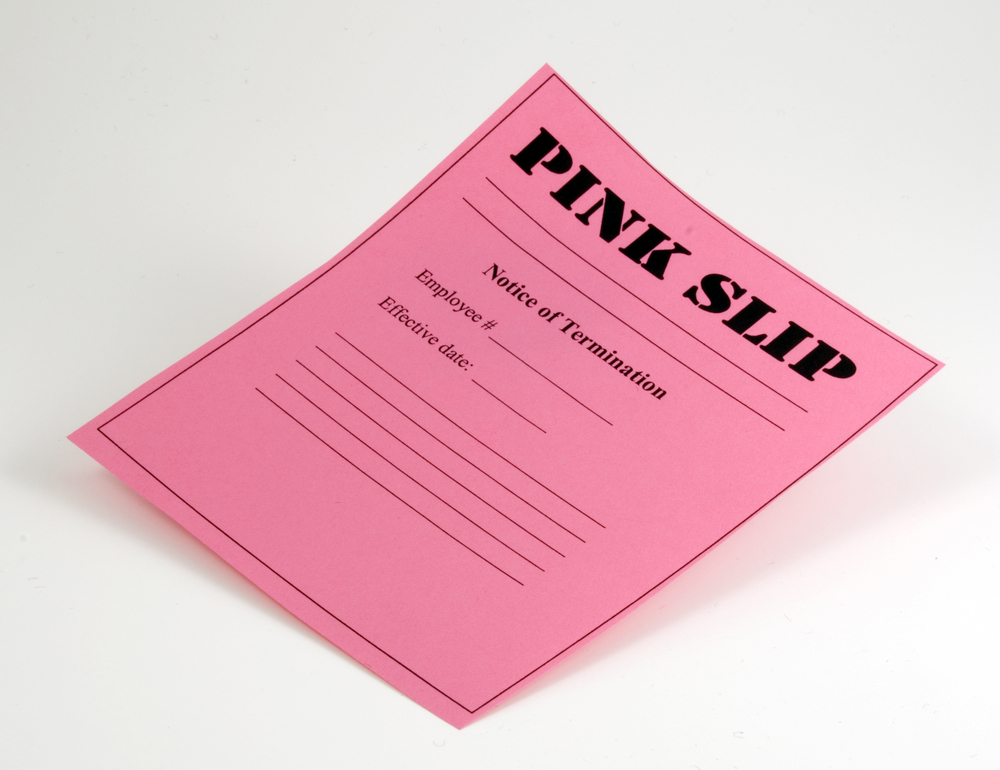 be the biggest beneficiary of the industry’s unstable nature. In those days, you got “pink-slipped.” Today, it’s a notice to meet with the HR department. The end result is the same.
Last week in Miami, four radio personalities lost their jobs on the same day – an event that is becoming all too familiar in many markets this time of year.
Kimba (WLYF, and a Zeta alum I crossed paths with back in the 1990s), Jade Alexander (WMXJ), Todd Allen Durkin (WKIS), and The Beast (WAXY/The Ticket) are the group that now find themselves on the beach – not where any of them hoped to be.
But this time around, the Miami Herald kept in touch with these recently unemployed personalities. As you might expect, members of the audience – as seen on social media – were far more outwardly upset by the sudden absence of favorite companions.
The personalities themselves took their harsh career news like the pros they are, thanking fans, their former employers, friends and supporters.
Let’s be fair – these sweeping dismissals are occurring in multiple markets, staged by a number of companies. It’s just that the Herald decided it might make a good story last week.
Aside from vacancies in the air studio, there are also the high-level executive departures that impact entire staffs of employees and managers. When someone at the top vacates a position, the losses often reflect on long-term plans and initiatives already underway. Many employees were hired by these now-exiting execs, often feeling cast adrift by these top-level decisions.
That was recently the case at Viacom CBS, the site of a  major executive shakeup. Two of the victims were Kent Alterman, longtime head of Comedy Central, and Sarah Levy, Viacom media networks’ COO.
The most remarkable part of Alterman’s departure was his letter to the staff, the epitome of class and honest perspective. It was published last week in a story by Variety’s Elaine Low and Daniel Holloway.
The ominous subject line of Alterman’s memo?
“We all get a turn; now it’s mine.”
Here’s the message he wrote to his staff:
Dear Treasured Colleagues,
Some of the most inventive fiction I’ve read comes in the form of farewell emails, so I’ll resist the temptation to be creative and try to be factual and brief. I apologize in advance if I’m not able to deliver on that.
As you have likely heard, I’m leaving my position as head of the Entertainment group. I’m not going to brag about all we’ve accomplished together (another temptation resisted). Instead, I will tell you how grateful I am. We were given a rare opportunity to create and maintain our own culture within the confines of an ever-changing and challenging corporate environment. While some might call me delusional, I contend that our ethos is defined by passion, respect, strong points of view, collaboration and kindness to each other. Dare I call it soulful? Maybe I just did.
We don’t give lip service to these things – we live them. On a daily basis. When I was offered the position of President of Comedy Central a few years ago, I was honestly not sure I wanted to accept. I worried it would take me too far away from the creative process, which is what attracted me to this business in the first place. Instead of fretting about that, I decided to embrace the opportunity and really lean into the leadership aspects of the job. I have been continually stunned by how deeply fulfilling leading this group has been for me. I’ve made smart bets on talented people who always make me appear to be smarter than I am. Together, we have shaped an organization that fills me with immense pride.
I don’t want to turn this into a name-checking email – if you don’t personally know how appreciative I am, then I have failed and I’m sorry. Thank you for being such a stellar group of humans. Thank you for letting me be myself. You have allowed me to take a strong stand on things, for right or wrong. More importantly, you have also allowed me to be transparent about the things I don’t know without feeling diminished or compromised.
I remind you that everything we do is driven by the talent with whom we work. I am forever grateful to all the artists who have chosen to trust us, especially with so many options available in the marketplace. This is something I never take for granted, and I urge you not to either. No matter how risky or uncertain our jobs can feel (and believe me, I’m in touch with that right now), please remember we are dependent on talent, and they are always in a more vulnerable position than we are.
As disruption and cataclysmic change have become the norm in our business, I remind you that change creates anxiety, but it also creates opportunity. How you respond to uncertainty has the potential to help you grow and make you stronger. Don’t be afraid to ask questions. Please continue to act in good faith with your colleagues and collaborators. This is what allows you to assume the same in them, fostering trust and a spirit of being in it together.
I’ve been so fortunate to work with all of you and be the steward of great brands. We have managed to create real meaning and relevance in Comedy Central, and Paramount Network is emerging in such an exciting way. These brands are the North Star of everything we do, and I hope their essence will continue to guide you moving forward.
Addressing an email to “Comedy Central_ALL, Paramount Network_ALL and TVLand_All” for the last time fills me with deep sadness and intense joy simultaneously. Or, put another way, the richness of being alive. Being in it with you these past years has been a privilege and honor. I will always be in your debt. If I can repay you along the way, I am always available to be helpful in any way I can.
With love, respect and appreciation, I remain,
Yours truly,
Kent
These are challenging times for most industries, and the media business is no exception.
The necessity for helping your people – even if you’re out the door – has never been more important. Alterman’s charge to his team – to “act in good faith with your colleagues and collaborators” – is what great stewards of brands and companies just do. And his presence – on the job and out the door matters:
I am one of many who is grateful for all that Kent Alterman has done for my career. Beyond that, he greenlit some of the most influential comedies of the last 2 decades. This news makes me sad, but I also know a lucky company will grab him quickly. Thanks for everything, Kent. https://t.co/g4SwaZW374
— Daniel Powell (@danieljpowell) November 11, 2019
Alterman’s missive to his staff is loaded with spot-on perceptions and wisdom. But the observation that jumped out at me goes to the heart of the media business – and that includes radio – as we know it today:
“No matter how risky or uncertain our jobs can feel (and believe me, I’m in touch with that right now), please remember we are dependent on talent, and they are always in a more vulnerable position than we are.”
That’s true whether you’re a news anchor, the star of the show, or the afternoon drive DJ.
There will no doubt be many more “realignments” in the weeks to come. How we collectively handle these very trying and difficult transitions says a lot about our industry’s future.
Will today’s young people still want to be a part of the high wire/no net radio industry? Can broadcasters provide a constructive, growth-oriented environment, despite the disruption that has rocked it to its core? How can current employees continue to navigate these roiling waters, bullet-proofing their job status with stations by providing great value?
Best of luck to you and my hope that this year, it’s not “your turn.”
Thanks to my friend & colleague, Marshall Cohen, who gets it.

Jacobs Media has consistently walked the walk in the digital space, providing insights and guidance through its well-read national Techsurveys.
In 2008, jacapps was launched - a mobile apps company that has designed and built more than 1,300 apps for both the Apple and Android platforms. In 2013, the DASH Conference was created - a mashup of radio and automotive, designed to foster better understanding of the "connected car" and its impact.
Along with providing the creative and intellectual direction for the company, Fred consults many of Jacobs Media's commercial and public radio clients, in addition to media brands looking to thrive in the rapidly changing tech environment.
Fred was inducted into the Radio Hall of Fame in 2018.
- Who Listens To Play-By-Play Sports On The Radio? - November 6, 2026
- What Advice Would You Give To Your Young Radio Self? - November 5, 2026
- “So, How Much Longer Are You Going To Do This?” - November 4, 2026


Fred, this piece really hits on the emotional side of the business — especially your reminder that how we leave matters just as much as how we perform.
But I think it’s also important to talk about why so many talented people are being forced to leave in the first place. In Canada, multi-million-dollar media corporations have received hundreds of millions in government support — money meant to protect local journalism and creative jobs. Yet we continue to see mass layoffs, while executive bonuses and shareholder payouts roll on (looking at you, Corus Entertainment).
The real tragedy isn’t just the job losses — it’s the creative decay that follows. There’s virtually no investment in innovation or new talent anymore. The same people keep getting rehired across the same companies, bringing the same average ideas. Meanwhile, creators like MrBeast are out there doing what radio used to do best — building community, creating real audience excitement, and innovating with format and storytelling.
At some point, “realignment” stops being about survival and starts being about short-term profit. These aren’t just market forces — they’re choices.
I completely agree with your call for professionalism and grace in how people handle being let go. But we also need that same level of accountability from the corporations making these decisions — especially the ones taking public money while cutting local content. Because when we treat layoffs as inevitable instead of intentional, we let a few powerful players keep rewriting the story of what this business could be.
Mark, I appreciate your wise perspective on the state of play, especially in Canadian radio where the business model is different. That said, many of the same pressures are in-play as in the States.
That fateful day for me came in the month of July when my raise was suppose to kick in…instead I was kicked out. I think I set a record for repeating the phrase “this doesn’t make sense”. Over the years, I’d adjusted and adapted to the changing radio industry. I did everything that was asked of me. When they said “win awards”…I did. I would’ve of taken a pay cut if they asked. Yet the numbers caught up with me…age and salary.
As bitter and disappointed as I was, my response to those offering sympathy was the same as when I was living out my rock n roll fantasy on the air-waves…I wish everyone could have the chance to experience working in radio.
I got to do things most people don’t. Meet rockstars…get in front of 20,000 people at a concert…and work side by side with some of the greatest most talented people in the business. And then go home and just be dad and music fan.
Being grateful and not burning bridges is just being a good Christian.
I agree with Marks comments above regarding corporate accountability and cutting local content.
I’ve lived long enough to see the city of Detroit bounce back…I’d love to see radio go back to the early days of FM radio. Let DJ’s be personalities…live the music…interact and connect with the community…push the boundaries. At this point what have you got to lose? More money? More talent?
Broadcasters have generally been risk-averse with their stations, especially given consumer boredom. I appreciate hearing your story, Paul. You poured a lot into your career and the stations you repped. Thanks for the comment.
You’re right – being let go from a broadcasting job for reasons other than one’s performance sort of is the norm in our business. How one reacts can determine future employment. While revenge can be sweet, it can be pointless as well – unless, of course, you exact it in a way that doesn’t hurt innocent colleagues. But probably for the sake of your own karma – and possibly other job prospects – it’s best simply to make as graceful an exit as possible and move on. That’s what I did, and never regretted it.
And with fewer and fewer broadcasters in America, it becomes a smaller net, Mitch.
What is that they say? “When a door closes, another one opens”?
IMO, that’s not career advice. It just means the carpenter you hired is an idiot.
Ha ha, Alan. Nice spin on the old saw.