


Heading into the new year, broadcast radio is an industry experiencing rapidly declining resources. The big marketing budgets of the past are long gone, leaving the heavy lift of brand-building and maintaining top-of-mind awareness to the scrappiest, savviest managers.
And yet, it is possible for so-called linear radio stations to create true connections with listeners who reside in the local community. We know local very much matters, especially in an environment that has become increasingly top-down. And the AI tsunami promises more impersonalization.
In this environment, smart radio stations and tuned-in personalities have the ability to truly engage listeners in unique and meaningful ways. It is notable that billboards, bus sides, television commercials, and even web videos can’t make authentic connections with the people filling out diaries or carrying around meters.
So, with tightening budgets, smaller staffs, and less time than ever, what’s the best course of action for an on-air talent these days who strive for connection but lack the resources to do it on a larger scale?
The answer may be social media. A new article in Social Media Today by Andrew Hutchinson. “Responding To Post Comments Can Have a Big Impact on Overall Performance” is Hutchinson’s premise, and he backs up his theory with a new study from Buffer, the social media management company.

The team at Buffer analyzed north of 2 million social media posts across multiple platforms in an effort to determine the cause-and-effect of social media response. This is something Lori Lewis was preaching when she joined Jacobs Media way back in 2011. At the time, the value of responding to listeners and fans on social media seemed like a good idea, but the theory was not yet supported by data.
The Buffer data isn’t perfect—nothing is—but it does suggest there are also differences by social media platforms. Some are more conducive to forging audience connections. Interestingly, Buffer measures more social lift on Threads: 42% engagement overall:

Interestingly, two of the oldest social media platforms—Facebook and Twitter/X generate the least engagement at 9% ad 8% respectively.
But why Threads (a platform admittedly I barely use)? The Buffer team points out Threads has purposefully tweaked its platform on their app with the intention of fostering interaction. It is obviously working.
All this comes at a time when social users aren’t posting or commenting like they used to, a problem when it comes to engagement.
The other surprise (to me) was the relative effectiveness of LinkedIn, a +30% for engagement. Perhaps at this moment in time when the job market has taken a turn for the worst, LinkedIn might present a fertile opportunity for brands that typically don’t use the platform a lot to take advantage of these impressive metrics:

The Buffer report breaks down the various social media players, offering theories as to why they seem to be more or less effective. Here’s the overall pecking order with Threads on top, while Bluesky is the laggard.
| Platform | Engagement lift (vs. baseline) |
|---|---|
| Threads | +42% |
| +30% | |
| +21% | |
| +9% | |
| Twitter/X | +8% |
| Bluesky | +5% |
Buffer’s Senior Content Writer Kirsti Lang sums up the net effect this way:
“…the simple act of responding to those who took the time to engage with you is beneficial. And it’s no engagement ‘hack.’ It’s less about gaming the algorithm and more about being… human?”
And while Buffer clearly admits the cause-and-effect of social response isn’t always clearcut, they feel they have strong enough findings across the various platforms to conclude there’s “a real behavioral effect.”
Now juxtapose this study across the reality of being on the air on a U.S. radio station in 2026. One thing we absolutely know from our AQ studies of commercial radio talent—they’re wearing a lot of hats. In fact, the average per personality sits at around three hats—or jobs within the station, the cluster, and/or the company.
So there’s plenty of reason to look at findings like Buffer’s and conclude there aren’t enough hours in the day to respond to every social post. And in fact, a sizable portion of American hosts agree with the notion that working social media is a time suck and a distraction from executing their shows.
We last asked our air talent respondents back in 2023’s AQ5 research study to agree/disagree with this statement:
“Social media often takes away time from me doing my show.”
And the results showed more hosts agreed than disagreed with this notion. In fact, over the last three years of these unique surveys, we tracked more than four in ten personalities who agree/strongly agree with the statement.

A look down the demographics at the right reveal agreement across many groups and categories. Note how those who work for big and medium-sized radio broadcasting companies are more apt to concur with this notion that social media gets in the way of them doing their jobs.
That’s too bad. And based on the Buffer data, you could make the case that social response is, in fact, a good use of their time. At a time when radio would do well to bolster its engagement, too many hosts view it as a distraction.
A dozen years ago at one of our Jacobs Summits, Lori booked Josh Mankiewicz (pictured) a popular host on Dateline NBC who has been there since 1995. Even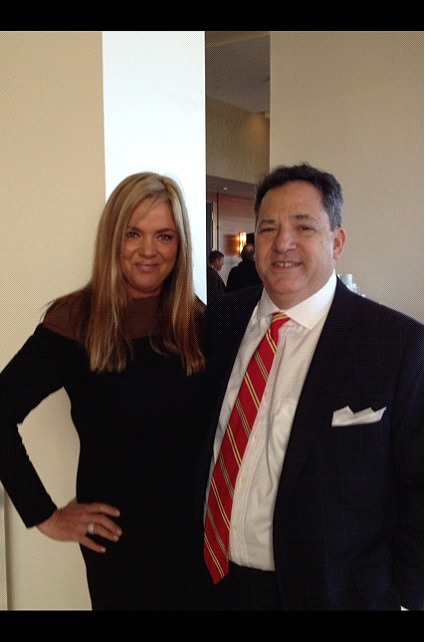 back then, Josh had a huge following, especially on Twitter.
Here’s the way I wrote about his philosophy of always posting a comment to every viewer and every fan who reached out to him socially:
“(Josh) thinks about his celebrity in a much different, more personal way. He is a Twitter savant, spending considerable time every day monitoring his feed, and personally staying in touch with fans and followers. When asked how he finds the time to keep tabs on Twitter amidst his other responsibilities, Josh actually struggled for an answer.
That’s because his philosophy of serving one fan at a time is innate. He reads their tweets, he considers them, and he responds. Because that’s what you do when you’re a celebrity and you’re afforded this amazing opportunity to connect with viewers in a genuine, very real way.
And his secret behind effectively using Twitter? Three words:
“Speed, humor, and snark.”
It’s not rocket science. It’s basic.
Josh isn’t setting appointments or promoting himself as so many media personalities do on Twitter.
He is authentically mixing it up with his audience.
And while no one knows that weird elixir of elements that make for great ratings in radio or TV—and Josh is the first person to tell you that—Dateline NBC’s ratings are up, and so is the activity on Twitter.”
That keynote took place a long time ago, but the basic principle’s Mankiewicz applied to his social responsiveness back then continues to resonate today. And back then, Josh admitted he was doing all this on a flip-phone! To this day, he still responds to everybody.
I’ve moderated scores of focus groups where I’ll hear respondents enthusiastically tell how it felt to have a popular air personality respond to their social media post. In fact, one described it to me once as “a digital autograph” and an event where the acknowledged listener has been known to brag about a response from a beloved host.
A lot has changed in social media and in radio since Lori made her case for responding to every fan. But there are certain commonalities still in place all these years later.
It is, and always has been, about connection. While that term has become something of a cliché and Internet buzzword, it is a coveted goal by shows, hosts, networks, and mom & pop radio stations. Thanks to social media, personalities have the unique ability to foster relationships that simply don’t exist on Spotify and other digital outlets.
For years now, we’ve suspected there’s been a relationship between social response and genuine audience connections.
And now we know there is.

Jacobs Media has consistently walked the walk in the digital space, providing insights and guidance through its well-read national Techsurveys.
In 2008, jacapps was launched - a mobile apps company that has designed and built more than 1,300 apps for both the Apple and Android platforms. In 2013, the DASH Conference was created - a mashup of radio and automotive, designed to foster better understanding of the "connected car" and its impact.
Along with providing the creative and intellectual direction for the company, Fred consults many of Jacobs Media's commercial and public radio clients, in addition to media brands looking to thrive in the rapidly changing tech environment.
Fred was inducted into the Radio Hall of Fame in 2018.
- That’s Not A Datapoint – That’s a Heartbeat - November 13, 2026
- Radio’s Short Bench - November 12, 2026
- The Digital Train Has Left The Station - November 11, 2026

Beware of distraction and chasing small audiences. Personal connection is EXCELLENT but our mission is LICENSED BROADCASTING. That’s where our REAL SERVICE is delivered.
It’s customer service 101. Don’t ignore them.
What astounds me is that, over the years, radio has chosen to ignore more and more people. It started with overnights: deeming that audience wasn’t worth a live announcer who could answer their calls or play their requests. Then, it was evenings. Now, we see afternoons under attack. Of course that was in the days of phones; when you could call a radio station or favorite announcer and actually talk to someone.
If you cannot be bothered to respond to people – what message does that send?
I couldn’t agree more. Companies that monitor and respond are smart. And
the response needs to be more than “reboot, download
an update, etc.”
Responding on social media sounds like perfect work for interns.
Fred,
I was at that Summit where Josh M spoke. Used him as an example with our staff back then. Just let them know they are seen and heard. That’s it…..and, hey, that’s at the top of Gen-Z’s list.
I don’t see the conundrum. Building a connection is a social pursuit, and social media is ideally suited to do this on a large scale. All those metrics are interesting, but I would suggest that it’s worthwhile to be on ALL of them. Use the A.I. tools available to quickly peruse messages and respond en masse. For us long-in-the-tooth guys, it doesn’t seem all that long ago when listeners were engaged one at a time on the phone, the only “A.I.” being an intern who might forward a caller who wanted more than a request or to leave a comment. On rare occasion, an interesting caller might be taped and played back to impress listeners that “we’re engaged with you!” But it was only playing to those already listening.
Social media is mass media. For free. No matter which platform one is on, human nature always applies: for every person who posts, there may be a dozen or more who just passively read along or press “like,” etc. Moreover, these conversation threads are almost immortal! How many times did a comment land in your notifications from a thread months or even years old? So engagement is always multiple, compared to the one-on-one phone days AND can extend long into the future. Compared to phones, I wonder how much greater the engagement-per-minute radio would compare?
The only downside is time. One workaround is the (now old-fashioned) blog. Then, when someone asks about a topic you’ve previously addressed, you slap in a link: click/done! Same goes for podcasts, if you’re one of those overachievers who does one in addition to your on-air gig.
All of this gives today’s air talent potential engagement that past jocks (and station managers) could only dream about. Don’t make it a “time suck” issue, but maximize your SPARE time. Make it support your “prime time.”
You must be where your audience is. Social media is one of many areas to explore. Better to have a targeted audience than no audience at all. The days of being all things to all people are over. Radio still has a place in your audience’s mind. You must be the first point of contact and the one they stay with.
Thaks for this, Gary.