


Can you feel it turning? Pretty soon, you’ll be able to actually hear it.
The “it” in question is radio’s business model. After more than a century, radio broadcasters are beginning to put their fundamental business model to the test. Just last week, two very different broadcast radio organizations announced they are moving full speed ahead on new ventures that will test brand new ways of creating and monetizing audio and video content.
The entities in question are The Bob & Sheri Show, which for 32 years has offered a solid, smart, and entertaining product for mostly AC stations all over the country. And the other is none other than NPR, the top producer of public radio programming content for hundreds of member stations.
The cynical among you (and yes, your numbers are growing) will chuckle and scowl, “This is nothing new. Other media companies have engaged in far more creative ventures over the years.”
Of course, that’s true. But what is remarkable about this news as the summer draws to a close in 2026 is just how radical a change each of these operations will be. Why is this happening and why is it happening now?
Over the last decade or so, I have often wondered what it would take for radio companies to experiment with different models, new platforms, and content experimentation in order to be more competitive. As Paul would always say, “It’ll happen when the bleeding gets so bad they’ll be forced to roll the dice, innovate, and try something different.”

Have we reached that crossroads here in the final months of 2026? Based on recent news stories, the answer to my question is “Maybe so.” Radio owners, producers, and networks are now going beyond rethinking their “givens”—they’re beginning to act on the research each has commissioned that demands change. Others appear to be simply applying their experience and “gut” to making seismic changes. The loudest voices are listeners—or in many cases, former listeners—who have drifted away to digital alternatives that are simply more congruent and more convenient. It looks like they may be finally getting heard.
But there’s a key economic side here, too, and it is also demanding experimentation and fiscal creativity. Even radio stations and shows with competitive ratings have become frustrated by the lack of demand for their advertising—or in the case of public radio, underwriting—inventory. Each has apparently reached the point where they are convinced it is time to throw caution to the wind and attempt something different.
The aforementioned Bob & Sheri Show provides a great starting point. The show has been very competitive since its syndicated launch exactly 30 years ago. The ensemble was inducted into the “Radio Hall of Fame” last year. By all accounts, it has been a success story.
But last week, Now Media Director of Syndication, Tony Garcia, along with host Sheri Lynch announced the show will pull the plug on their syndication model, ending its distribution at the conclusion of this year. That’s when the show will transition to a paid direct-to-listener subscription model.
In its release, Garcia noted ad revenue has experienced a steep 20% to 40% decline since 2017. They are not alone. Since the pandemic, many radio stations and shows have failed to right the economic ship.
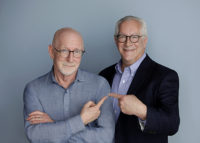
Sheri Lynch (pictured below), the ultimate realist, put it this way to Inside Radio:
“Our time as radio broadcasters, I believe, has drawn to an end.” Lynch noted the old model no longer is viable with ways “people consume media and how advertisers spend their money.”
Garcia believes the brand will have to innovate its way to new solutions:
“Thinking about the future, we’re not seeing [syndication] as a viable distribution channel for our content. While we are nostalgic for the good old days, the good old days don’t come back. It’s up to us to figure out [what] the next step forward is, but when we bet on ourselves, we usually do ok.”
Jacobs Media has conducted research for this show over the past several years. I have personally designed research for some of the greatest syndicated and local radio shows over the past 50 years, including Howard Stern, Bob & Tom, Drew & Mike, John Boy & Billy, Lex & Terry, Drew & Mike, and many others. The relationship Sheri Lynch has forged with her community is off the charts.
If anyone can figure out a Plan B, she and Tony will do it. Sheri has a strong emotional identity that resonates strongly for her listeners and followers. She is more than just a morning host—her audience appreciates the fact she is a fully developed talent who connects with audiences on many different levels.
I’ll be watching the next several months to see how Sheri, Tony, and company maneuver their way to a new model. Everyone in radio should be rooting for these guys to pull this off because whatever becomes their “best practices” for reinvention might very well apply to other syndicated shows, as well as local ones looking for different ways to distribute and monetize their content.
And then there’s NPR, one of the most successful and iconic operations in all of radio. Last year ushered in a tectonic shift for public radio as federal funding essentially came to an end. That move by the Trump Administration led to the demise of the Corporation for Public Broadcasting, and as a result, ushered in a new era in fundraising, including many public radio stations dipping their toe into the digital revenue space, working with our Chris Brunt.
 Last week, NPR announced the debut of a new “video-first” series called Machine Gods. It’s a show with an emphasis on consumers, the sprawling growth of AI, and the broad impact of technology. Given the current controversies fomenting around these topics, NPR’s timing looks perfect.
This new acquisition of shows hosted by personalities with strong reputations and impressive numbers of fans. Casey Newton and Kevin Roose hosted Hard Fork, a technology and AI-based show that was produced for the New York Times.
As Inside Radio reported, Machine Gods works cross-platform—video, podcasts, and perhaps circling back to actually becoming a broadcast radio show. It might also signal that NPR is getting serious about the power of personality, an area that has become diluted in recent years as a number of hosts—Audie Cornish, Lulu Garcia Navarro, Ari Shapiro—have left for greener pastures or other pursuits.

NPR’s new Chief Content Officer, Nadine Zylstra (pictured below), sees the acquisition of Newton and Roose as a coup:
“Kevin and Casey are two of the sharpest, most trusted voices covering the technology shaping our world. Bringing their extraordinary reporting and dynamic rapport to NPR is a huge win for our audiences and represents an exciting, strategic expansion of our digital slate.”
Personalities, video, and AI represent new emphasis points for NPR, an organization that has seemingly had leadership and strategic struggles. Will the addition of Machine Gods represents an important shift in emphasis, both from a content and monetization standpoints? Next year should tell us whether Machine Gods is truly the catalyst for more change, and whether the vibe will permeate to local markets.
Overall for broadcast radio, these changes represent a hopeful sign, not just for the Bob & Sheri Show and NPR, but for the industry as a whole. It gives other broadcasters a permission slip to attempt new ventures, as well as experiment with new models.
The turning of the screw can signal positive change for an industry that has been too long married to the status quo.
The LinkedIn post below contains a short video by Newton and Roose, as well as other changes in the works content-wise at NPR:

Jacobs Media has consistently walked the walk in the digital space, providing insights and guidance through its well-read national Techsurveys.
In 2008, jacapps was launched - a mobile apps company that has designed and built more than 1,300 apps for both the Apple and Android platforms. In 2013, the DASH Conference was created - a mashup of radio and automotive, designed to foster better understanding of the "connected car" and its impact.
Along with providing the creative and intellectual direction for the company, Fred consults many of Jacobs Media's commercial and public radio clients, in addition to media brands looking to thrive in the rapidly changing tech environment.
Fred was inducted into the Radio Hall of Fame in 2018.
- Is PRTS 26 A “False Positive” For Public Radio? - October 9, 2026
- Remembering Pierre Robert – “The Face Of The Franchise” - October 8, 2026
- It’s The Personality, Stupid - October 7, 2026

Something flipped in 2026. I have no personal experience being on board a sinking ship, but for some it feels like it is and it’s time to head to the lifeboats. The worrying part is: “Even radio stations and shows with competitive ratings have become frustrated by the lack of demand for their advertising”.
Protect Bob & Sheri at all costs.
Always appreciate your comments, Matt.
Hitting REFRESH is always a good thing to prevent jam ups. Cost-Efficient Radio has an essential place using and coordinating all available talent in the Public Interest. Rock On Licensed Radio.
Maybe we should hit “REFRESH” twice, Clark. Thanks for chiming in.